Topic
Iran and the Gulf
The 2026 Iran conflict read through the things it actually moves: Hormuz transit, Gulf output policy, tanker risk and the price of crude.
- Bab el-Mandeb fell below its 2024 low. Suez did not.Geopolitics & trade
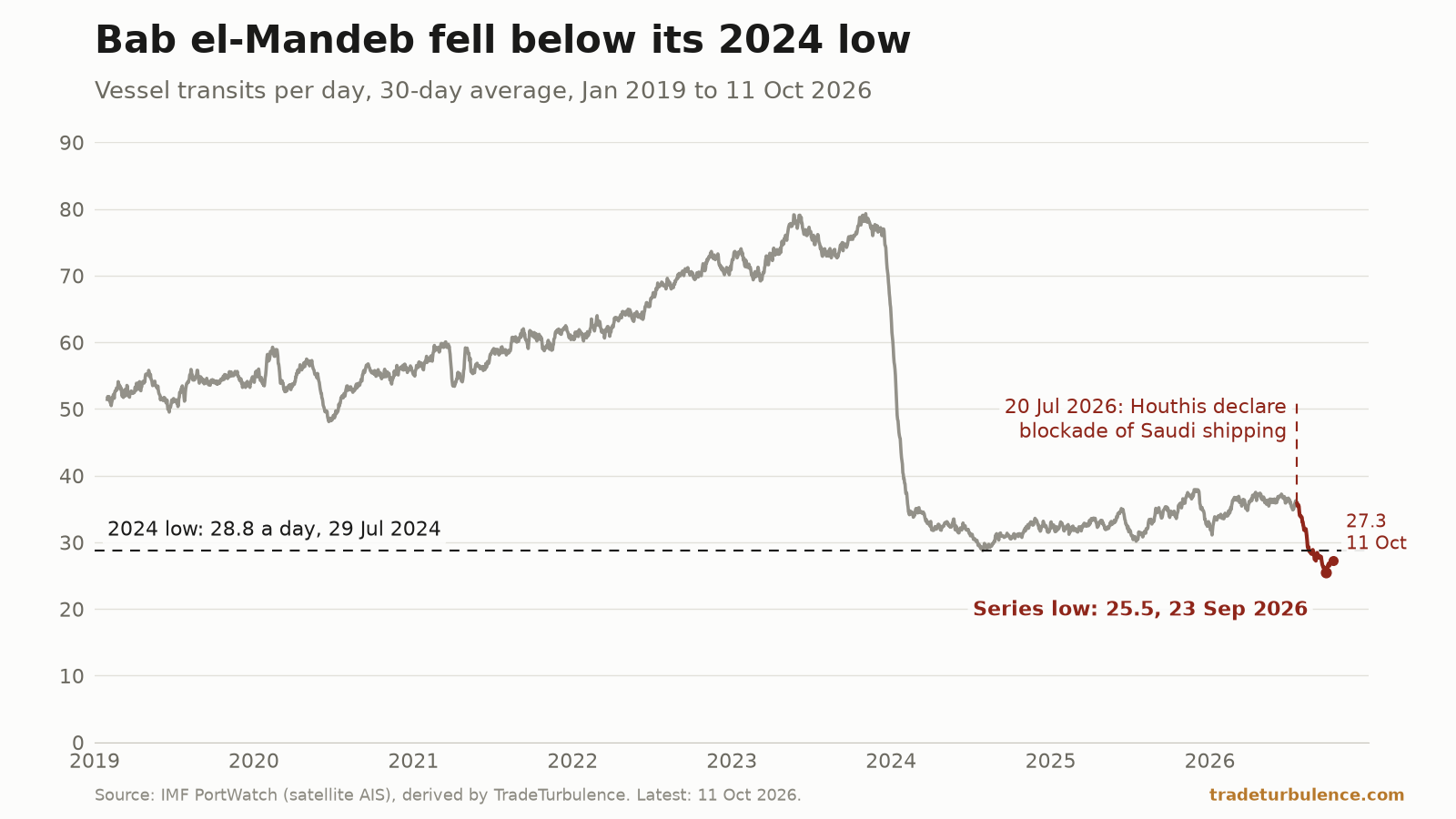
Bab el-Mandeb's 30-day traffic hit 25.5 transits a day on 23 September, the lowest in PortWatch's series from 2019. Tankers were 61% of the fall. Suez held.
- The Bosporus is 34% of the rise in route displacement. Hormuz, 3%Geopolitics & trade
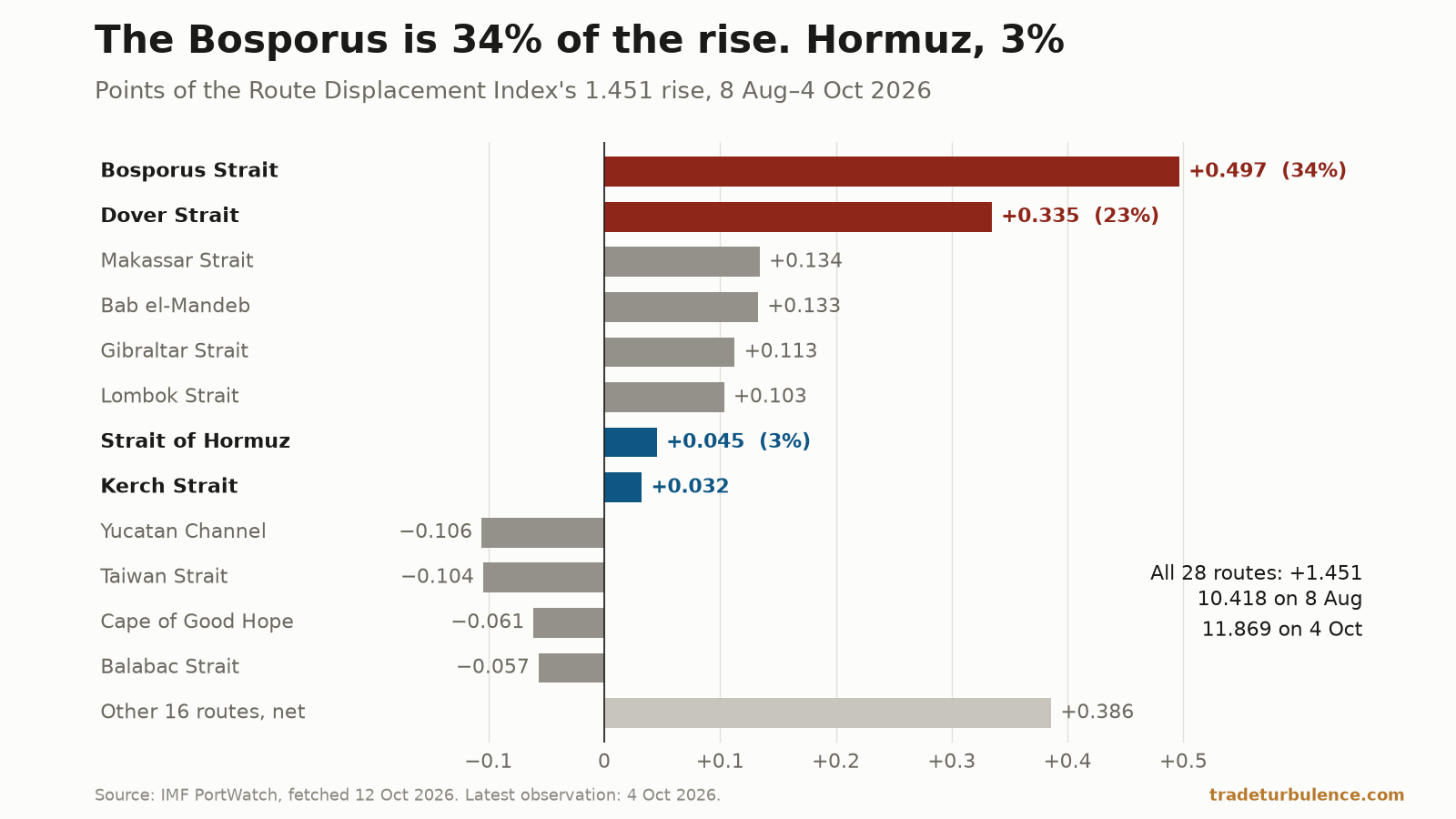
On counts fetched 12 October, the Route Displacement Index rose from 10.42% on 8 August to 11.87% on 4 October. The Bosporus and Dover supplied 57%; Hormuz, 3%.
- Brent rose 23% in a month. The Hormuz counts point both waysMarkets
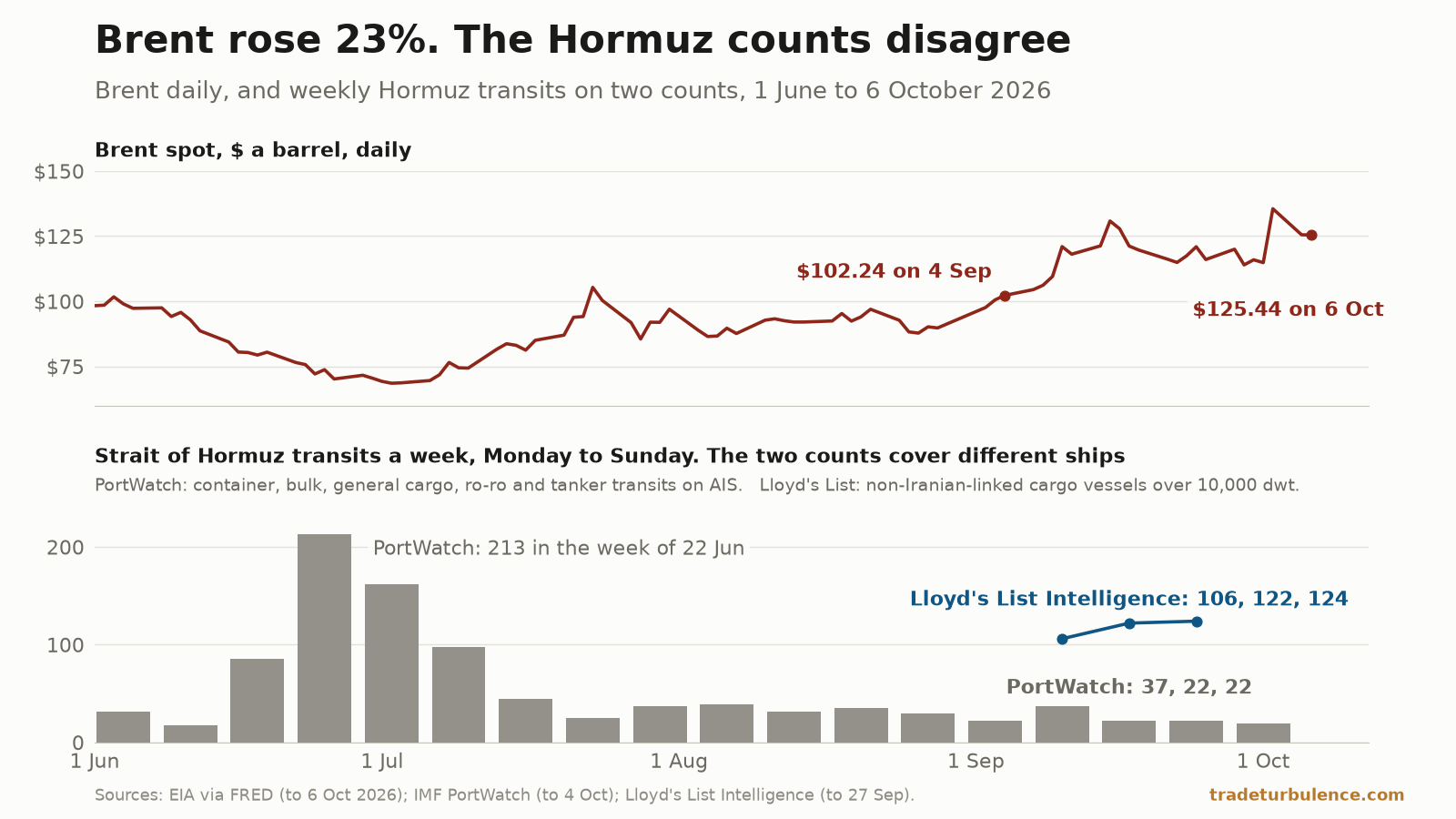
Brent rose 22.7% from 4 September to 6 October. PortWatch has 109 Hormuz transits in September; Lloyd's List, counting a different set of ships, at least 477.
- A tenth of chokepoint traffic is on a different route.Geopolitics & trade
The Route Displacement Index reached 10.29% on 8 August, the highest of 2,749 daily readings since 2019. Total chokepoint transits ran 6.1% under baseline.
- Brent is high. It is not extreme.Markets
Brent at $91.82 sits at its 78th percentile: 271 of the past 1,260 trading days were dearer. The Strait of Hormuz ran July at 18% of its pre-war baseline.
- The Strait of Hormuz hit zero three times. It is still at 18%.Geopolitics & trade
Transits through the Strait of Hormuz fell from 152 on 22 February to zero on 13 March. July ran at 16.5 a day against an 89.7 baseline — 18% of normal.
- Saudi Arabia entered the war. The index cannot see it yet.Geopolitics & trade
US and Saudi forces struck Iran-backed militias in Iraq on 29 July. Every series in the Stress Index predates it — the oldest by 89 days. What that hides.
- Ukraine hit Iran-bound ships in the Caspian. Oil is up 22%.Geopolitics & trade
Ukraine's Caspian strikes fused two wars into one supply line. Brent has round-tripped from $71 to $138 to $68, and the price data stops before the attack.