Supply chains
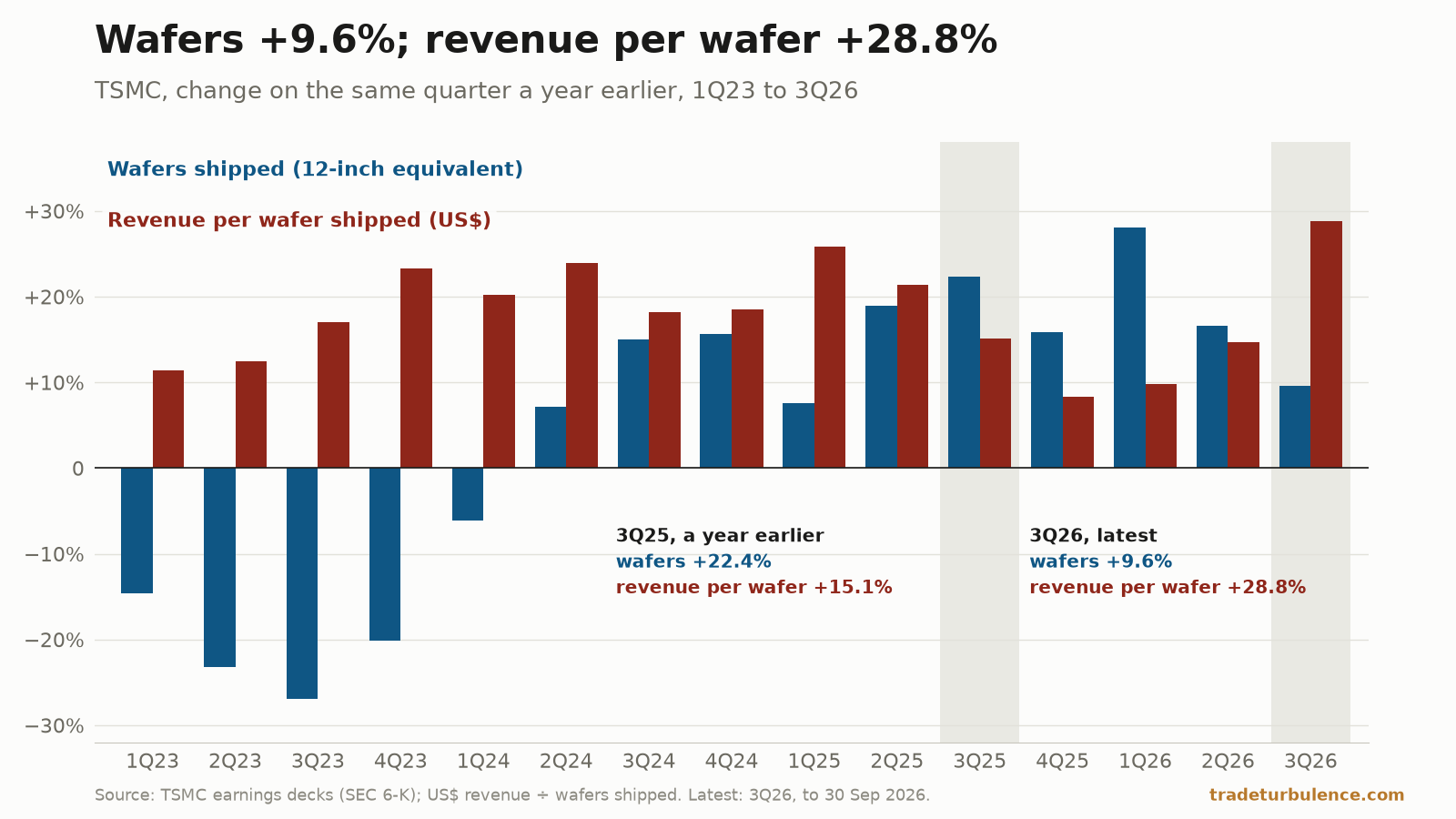
Where goods physically move and what happens when a link is priced out: semiconductors, shipping and the substitution that follows.
20 pieces
2026
Latest · 23 Oct 2026
Data
Read
10 topics, followed by the complete archive — 40 pieces published since July 2026.
Where goods physically move and what happens when a link is priced out: semiconductors, shipping and the substitution that follows.
Crude and refined product pricing, output decisions and the distance between a headline shock and a sustained change in the forward curve.
Duty schedules, exclusions and retaliation, read as macroeconomic instruments rather than legal events.
Where ships can and cannot pass: daily transits through the maritime chokepoints, each counted against its own baseline, the share of traffic pushed onto a different route, and the rivers that barges depend on.
The 2026 Iran conflict read through the things it actually moves: Hormuz transit, Gulf output policy, tanker risk and the price of crude.
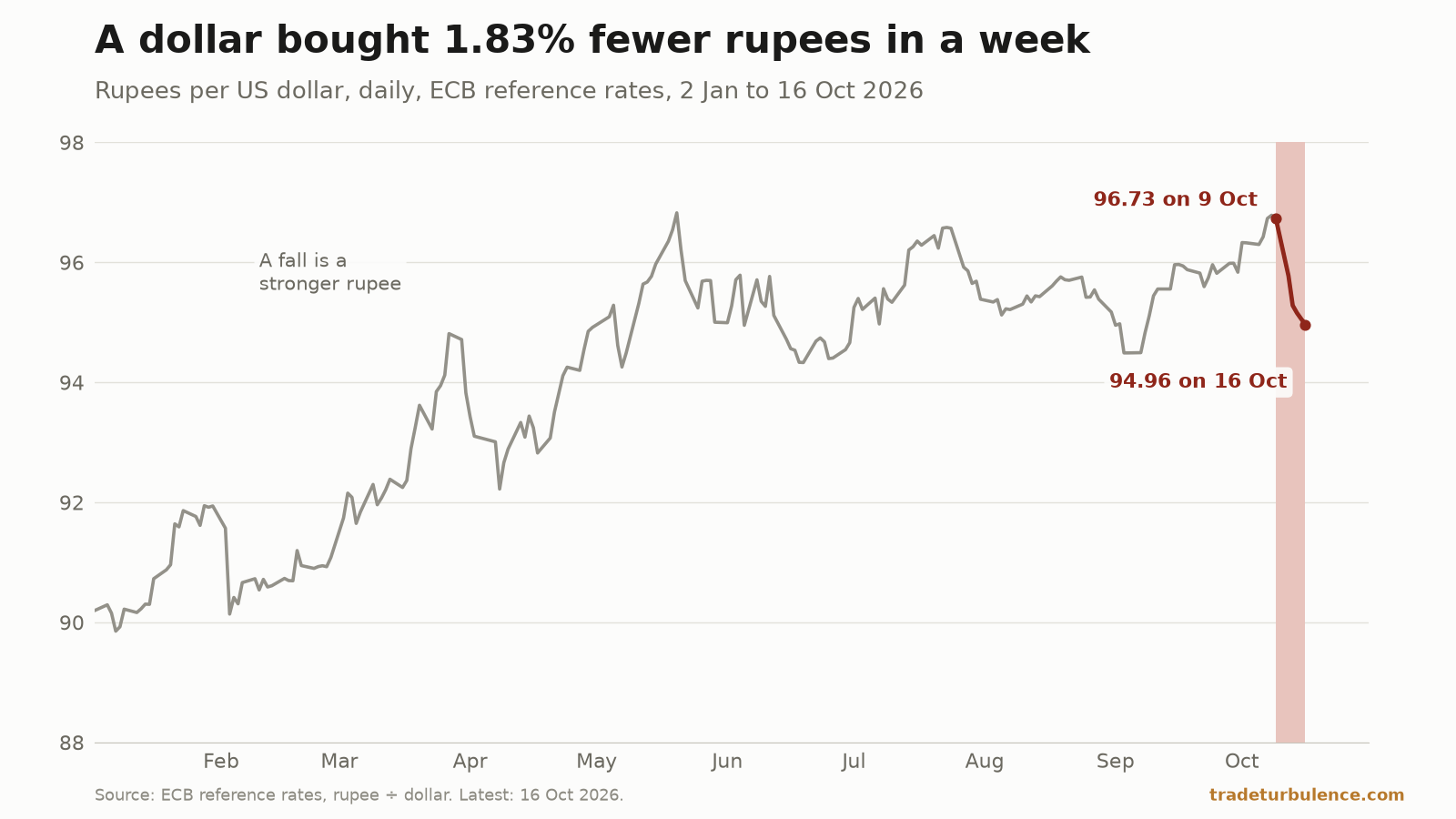
The dollar and the currencies trade is priced in, read as levels against their own history rather than daily moves: who is actually weakening, against whom, and what that does to the price of traded goods.
Bilateral flows, export composition and the tariff schedule, traced through customs and balance-of-payments data rather than announcements.
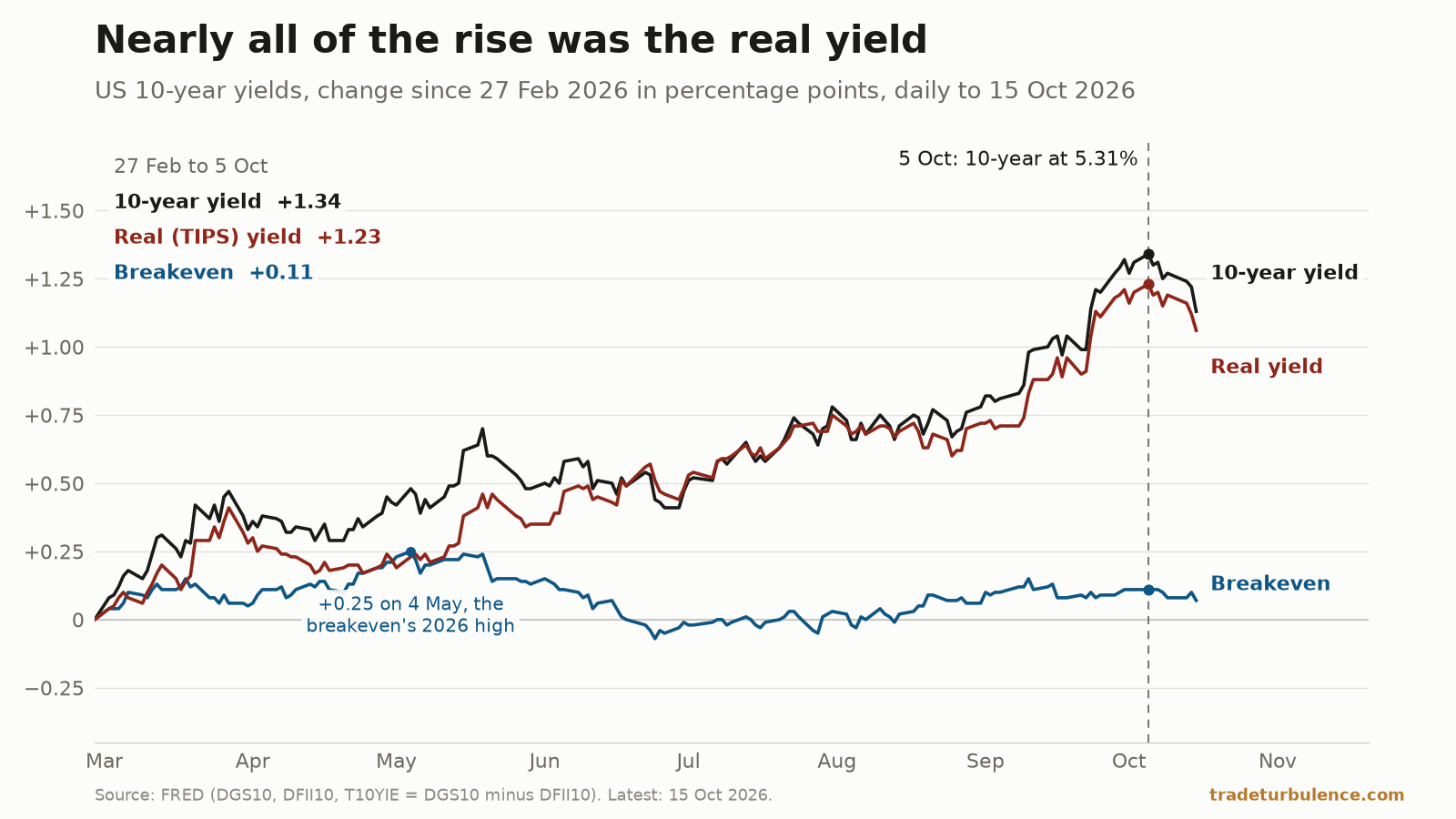
The price of long money and what it costs the physical economy: Treasury yields, the shape of the curve, and the channel from US rates into trade credit, inventory financing and freight.
The capital, power and labour cost of the AI build-out, and the question of who is actually paying for it.
Consumer prices and the rates central banks set against them, read from each statistics office's own release and compared across economies.
Food and Fertiliser (2) · Gas and Power (2) · Semiconductors (2) · Emerging Markets (1) · Equity-Markets (1) · Metals and Minerals (1) · Sanctions and Export Controls (1)