Iran's Oil Strategy: Navigating the Strait of Hormuz Amid Conflict and Global Market Shifts
Explore how Iran continues to export millions of barrels of oil to China via the Strait of Hormuz despite regional conflict. Analyze the geopolitical, economic, and security implications of this disruption on global trade and energy markets.

Executive Summary
The Strait of Hormuz, a vital artery for the global oil supply, is currently a focal point of geopolitical tension, impacting Iran’s oil export strategy significantly. Despite regional conflicts choking the passage, Iran has managed to send millions of barrels of oil to China, albeit at reduced volumes. Over the past 30 days, there has been an 83% drop in tanker transit through the Strait, with Iran-China oil exports slashed by 60% to 75%. This disruption has reverberated through global oil markets, causing significant volatility in oil prices and raising concerns over energy security.
Geopolitical Context and Historical Parallels
The current geopolitical tensions in the Strait of Hormuz recall the 1980s Tanker War, where similar disruptions led to a dramatic surge in oil prices. The Strait remains a strategic chokepoint, with about 20% of the world’s oil supply passing through it daily. As of March 1, 2026, the average tanker transits have plummeted to four per day, down from 24, illustrating the severe impact of the conflict on oil flows. Iran has resorted to deploying “dark fleet” tankers, vessels operating without transponders, to mitigate transit constraints and maintain trade with China. This strategy highlights Iran’s resilience in navigating geopolitical challenges.
Related: Global Economic Shockwaves: The Impact of Iran’s Strait of Hormuz Shutdown
Trade Flow Analysis
Before recent conflicts, approximately 24 tankers carrying 20 million barrels of oil traversed the Strait daily. However, as geopolitical tensions escalated, tanker traffic reduced to an average of four transits per day over the last 30 days, reflecting an 83% decrease. Correspondingly, Iran’s oil exports to China have diminished from 1.5 to 2 million barrels per day to a mere 11.7 to 12 million barrels over the past 30 days. This significant reduction underscores the stranglehold of regional conflict on Iran’s oil export capabilities.
Sector and Regional Winners and Losers
The ripple effects of reduced oil flow through the Strait of Hormuz are acutely felt by major oil-importing nations such as China, India, Japan, and South Korea. These countries, heavily reliant on Middle Eastern oil, face increased energy costs and potential supply chain disruptions. Energy-intensive industries within these regions confront heightened operational costs, potentially stalling economic growth.
Defense and Security Implications
The strategic importance of the Strait of Hormuz in global security cannot be overstated. The current reduction in oil flow highlights the vulnerabilities inherent in this critical maritime passage. As tensions escalate, military presence in the region has increased, with potential confrontations looming. Defense sector experts emphasize the need for strategic planning to counteract the vulnerabilities exposed by the current crisis, underscoring the significant defense and security implications.
Market Impact and Concrete Numbers
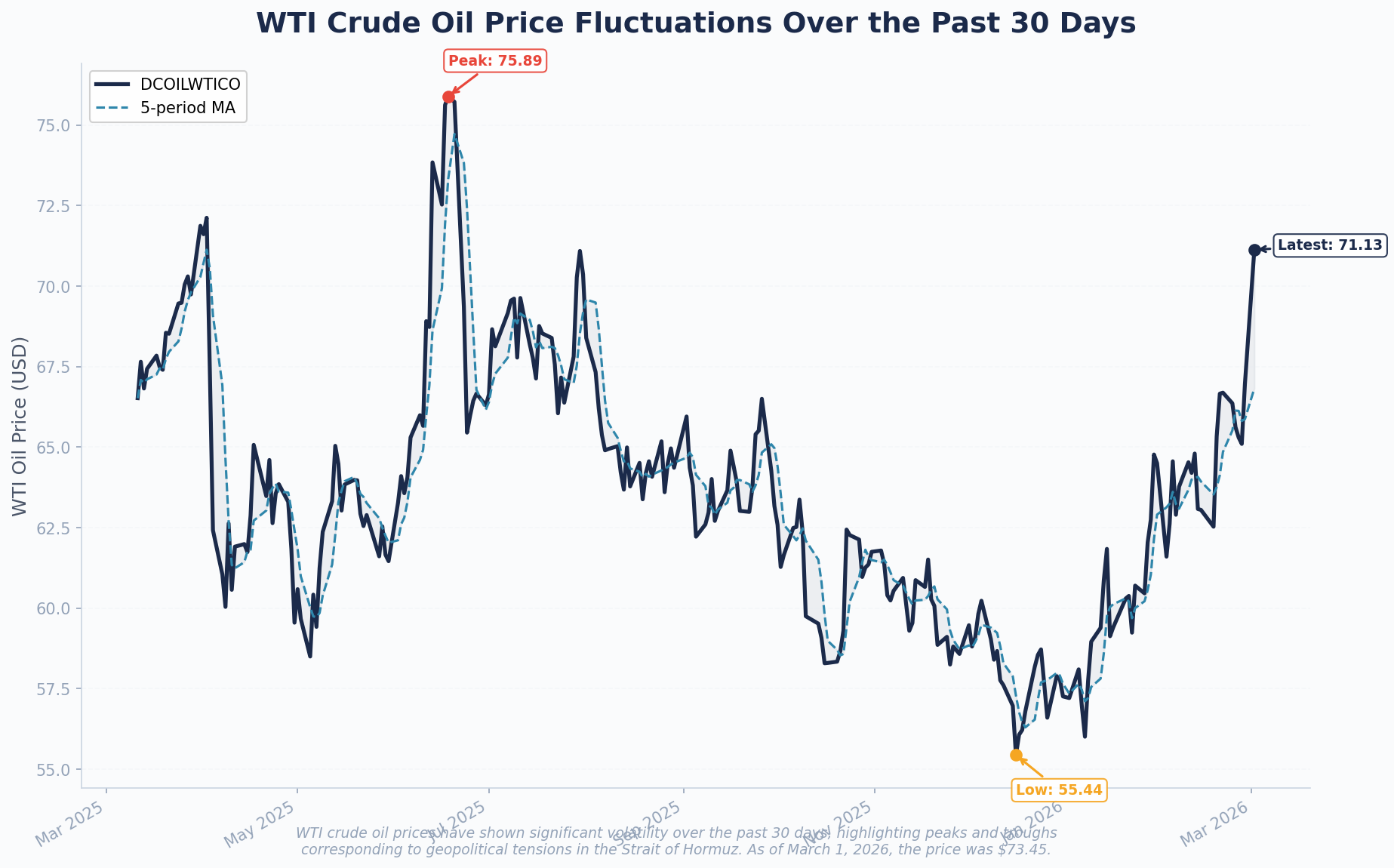
The disruption of oil passage through the Strait has caused significant volatility in global oil markets. Over the past 30 days, oil prices have fluctuated markedly, responding to the reduced supply and heightened geopolitical tensions. As of late February 2026, Brent crude prices have experienced a turbulent ride, with increases reaching up to 15% compared to early February levels. This volatility reflects the market’s sensitivity to disruptions in the Strait, a key conduit for global oil supplies.
Related: Iran Conflict and Its Ripple Effect on Global Stock Markets: An In-Depth Analysis
Emerging Market Perspectives
Emerging economies, grappling with increased energy costs, face significant challenges. The disruption in oil supply strains economic resources, exacerbating existing vulnerabilities. Many are now reconsidering their energy security policies, exploring alternative energy sources, and enhancing regional cooperation to mitigate the impact of such disruptions. Economists predict that these pressures could lead to policy shifts aimed at improving resilience against future energy shocks.
Policy Scenarios and Outlook
Looking forward, the geopolitical landscape presents two potential scenarios: a prolonged conflict or a diplomatic resolution. A continuation of conflict could lead to further disruptions in oil supply, driving prices higher and exacerbating economic instability. Conversely, diplomatic efforts could restore stability, normalizing oil flows and alleviating market volatility. The outcome of these scenarios will significantly influence global GDP growth and inflation rates, with the potential to either stabilize or unsettle global economic conditions further.
The comprehensive analysis of Iran’s oil strategy amid the current geopolitical tensions in the Strait of Hormuz reveals a complex interplay of economic, security, and policy factors. As the global community navigates this precarious situation, the implications for energy markets and geopolitical stability remain profound and immediate.
Previous Article: China’s Export Surge Amid Middle East Conflict: A Geopolitical Trade Analysis and Its Impact on the USA and EU